Sunday, February 19, 2012

Mr. Rotts Room Blog February 20 - 24th

Welcome Space Travelers!


Welcome... sorry about being gone so much this week... after hitting my head skiing... and having a concussion it was really hard to be in the classroom... but after seeing my doctor, and some new medicine, my head is feeling a TON better and I am ready for us to get back at it this week!  I am sure glad I had my helmet on.. Or my concussion could have been much worse!!  Its like wearing a helmet when you ride your bike, or looking both ways before crossing the street... simple things can make a huge difference in life! Take time to do those simple things, trust me it helps!
   
THIS WEEK:  We will be working on some more order of operations, and starting algebra... that will be our focus for the next few weeks!  We will be using difference symbols for multiplication and letters to represent numbers... it’s a crazy world!
CALCULATOR !!!  YOU really want to make sure you purchase a calculator that can do fractions, it needs to have an ABC button on it!  Trust me you’re going to want a fraction calculator!!

SPACE  FACT: Due to short week no space fact this week.
   
BLOG QUESTIONS: See the Space Facts for help!
                        GONZAGA MENS BASKETBALL           
Well.. What can we say??? They had their chance to at least tie for first place but after losing to the Dons on Saturday night, it looks like the Zags might not win their division this year, and UG... could it be that they will not be invited to the big dance for March Madness...?  HUGE HUGE game this Thursday against BYU... they HAVE to win that one!  Keep your fingers crossed... its still possible
Fri, Nov 11 Eastern Washington Spokane, Wash. W 77 - 69
Mon, Nov 14 Washington State Spokane, Wash. 9 p.m. W 89-81
Sat, Nov 26 Western Michigan (Spokane Arena) 1 p.m. W 78-58
Wed, Nov 30 Notre Dame Spokane, Wash. 8:15 p.m. W 73-53
Sat, Dec 03 Illinois Champaign, Ill. 12:15 p.m. L 82-75
Sat, Dec 10 Michigan State Spokane, Wash. 6 p.m. L 74 - 67
Thu, Dec 15 Oral Roberts Spokane, Wash. 6 p.m. W 67 - 61
Sat, Dec 17 Arizona (Battle In Seattle) Seattle, Wash. (KeyArena) 1 p.m. W 71 - 60
Tue, Dec 20 Butler Spokane, Wash. 6 p.m. W 71-55
Thu, Dec 22 Air Force Spokane, Wash. 6 p.m. W 70-60
Wed, Dec 28 Portland * Spokane, Wash. 6 p.m. W 90-51
Sat, Dec 31 Xavier Cincinnati, Ohio 5 p.m. W 72-65
Thu, Jan 05 Pepperdine * Spokane, Wash. 6 p.m.  W 73-45
Sat, Jan 07 Santa Clara * Spokane, Wash. 5 p.m. W82-60
Thu, Jan 12 Saint Mary's * Moraga, Calif. 8 p.m. L 83-62
Sat, Jan 14 Loyola Marymount * Los Angeles, Calif. W 62-58
Thu, Jan 19 San Francisco * Spokane, Wash. W 74-63
Sat, Jan 21 San Diego * Spokane, Wash. 5 p.m.  W 77-60
Thu, Jan 26 Portland * Portland, Ore. 8 p.m. W 74-62
Thu, Feb 02 BYU * Provo, Utah 7 p.m. L 73- 83
Sat, Feb 04 Pepperdine * Malibu, Calif. W 72-60
Thu, Feb 09 Saint Mary's * Spokane, Wash. 8 p.m.  W 73-59
Sat, Feb 11 Loyola Marymount * Spokane, Wash. 5 p.m. W 78-59
Thu, Feb 16 Santa Clara * Santa Clara, Calif. 8 p.m. W 73 - 62
Sat, Feb 18 San Francisco * San Francisco, Calif.  L 66-65 
Thu, Feb 23 BYU * Spokane, Wash. 8 p.m.
Sat, Feb 25 San Diego * San Diego, Calif. TBA

Remember MATH is OUT OF THIS WORLD!

As always, you are amazing, incredible people with the whole world waiting to be changed by YOU!

Mr. Rott 


Saturday, February 11, 2012

Mr. Rotts Room Blog February 13-17

Welcome Space Travelers!

Welcome... a new week.. And of course more math!  Do you know how much math goes into space?  Just think, building the rockets, the astronauts suits, food, the travel path, everything that goes on in the launching of a rocket is connected to math!  In fact, the countdown to lift off... is all math... wow how lucky are we to be able to be part of such a HUGE part of life!  So remember, when your studying math, you just like everyone who has any involvement in the space program learned the exact same material that you are leaning!
   
THIS WEEK: We continue working on parents, and converting them into decimals and factions... towards the end of the week.. .we will be into order of operations... say what? Yes .. Order of operations.. Not like an operation.. Hahah but what we have to do with math to make srue we get the correct answer.
               
CALCULATOR !!!  YOU really want to make sure you purchase a calculator that can do fractions, it needs to have an ABC button on it!  Trust me you’re going to want a fraction calculator!!
SPACE  FACT: What does it take to be an astronaut?
Have you ever wondered if you have what it takes to become a NASA Astronaut? The term "astronaut" derives from the Greek words meaning "space sailor," and refers to all who have been launched as crew members aboard NASA spacecraft bound for orbit and beyond. Since the inception of NASA's human space flight program, we have also maintained the term "astronaut" as the title for those selected to join the NASA corps of astronauts who make "space sailing" their career profession. The term "cosmonaut" refers to those space sailors who are members of the Russian space program.

The crew of each launched spacecraft is made up of astronauts or cosmonauts drawn from the various categories described in these pages. The crew assignments and duties of commander, pilot, mission specialist, or payload specialist are drawn from the NASA professional career astronauts. Mission Applicants for the Astronaut Candidate Program must be citizens of the United States.

Commander and Pilot Astronaut Duties
Pilot astronauts serve as both Space Shuttle and International Space Station commanders and pilots. During flight, the commander has onboard responsibility for the vehicle, crew, mission success and safety of flight. The pilot assists the commander in controlling and operating the vehicle. In addition, the pilot may assist in the deployment and retrieval of satellites utilizing the remote manipulator system, in extravehicular activities, and in other payload operations.

Basic requirements for an Astronaut Pilot include the following:

1. Bachelor's degree from an accredited institution in engineering, biological science, physical science, or mathematics. An advanced degree is desirable. Quality of academic preparation is important.
2. At least 1,000 hours pilot-in-command time in jet aircraft. Flight test experience is highly desirable.
3. Ability to pass a NASA space physical which is similar to a military or civilian flight physical and includes the following specific standards:

    Distant visual acuity: 20/100 or better uncorrected, correctable to 20/20 each eye.
    Blood pressure: 140/90 measured in a sitting position.
    Height between 62 and 75 inches.
Mission Specialists
Mission specialist astronauts work with the commander and the pilot and have overall responsibility for coordinating operations in the following areas: systems, crew activity planning, consumables usage, and experiment/payload operations. Mission specialists are trained in the details of the onboard systems, as well as the operational characteristics, mission requirements/ objectives, and supporting equipment/systems for each of the experiments conducted on their assigned missions. Mission specialists perform extravehicular activities (EVAs), or space walks, operate the remote manipulator system, and are responsible for payloads and specific experiment operations.

Mission Specialist Astronaut Duties
Mission specialist astronauts, working with the commander and pilot, have overall responsibility for the coordination of Shuttle operations in the areas of crew activity planning, consumables usage, and experiment and payload operations. Mission specialists are required to have a detailed knowledge of Shuttle systems, as well as detailed knowledge of the operational characteristics, mission requirements and objectives, and supporting systems and equipment for each payload element on their assigned missions. Mission specialists will perform extravehicular activities, payload handling using the remote manipulator system, and perform or assist in specific experiment operations.

Basic requirements for a Mission Specialist include the following:

1. Bachelor's degree from an accredited institution in engineering, biological science, physical science, or mathematics. Degree must be followed by at least three years of related, progressively responsible, professional experience. An advanced degree is desirable and may be substituted for part or all of the experience requirement (master's degree = 1 year of experience, doctoral degree = 3 years of experience). Quality of academic preparation is important.

2. Ability to pass a NASA space physical, which is similar to a military or civilian flight physical and includes the following specific standards:

    Distance visual acuity: 20/200 or better uncorrected, correctable to 20/20, each eye.
    Blood pressure: 140/90 measured in a sitting position.

3. Height between 58.5 and 76 inches.
Payload Specialists
Payload specialists are persons other than NASA astronauts (including foreign nationals) who have specialized onboard duties; they may be added to shuttle crews if activities that have unique requirements are involved and more than the minimum crew size of five is needed.

First consideration for additional crew members is given to qualified NASA mission specialists. When payload specialists are required they are nominated by NASA, the foreign sponsor, or the designated payload sponsor. In the case of NASA or NASA-related payloads, the nominations are based on the recommendations of the appropriate Investigator Working Group (IWG).

Although payload specialists are not part of the Astronaut Candidate Program, they must have the appropriate education and training related to the payload or experiment. All applicants must meet certain physical requirements and must pass NASA space physical examinations with varying standards depending on classification.
BLOG QUESTIONS: See the Space Facts for help!
1) Do you think that its worth all the work to become an astronaut?  Why or why not?

2) If you were to fly every day for 3 and a half hours how many days would it take you to reach the required 1000 hours pilot-in-command time in jet aircraft?

3) What is the measurement in feet if 12 inches equals 1 foot in order to be an astronaut Height must be between 58.5 and 76 inches equals in feet and inches?

4) For the education requirement, how many total years would it take for a candidate to earn his or masters degree?
             GONZAGA MENS BASKETBALL

It was a great game against St. Mary’s!  The guys played great, and worked hard and it showed at the end with a terrific win!  St. Mary’s was ranked #16 in the Nation, so that will surely move us up in the top 25!  Now they have to beat BYU and St. Mary’s has to lose! 
Fri, Nov 11 Eastern Washington Spokane, Wash. W 77 - 69
Mon, Nov 14 Washington State Spokane, Wash. 9 p.m. W 89-81
Sat, Nov 26 Western Michigan (Spokane Arena) 1 p.m. W 78-58
Wed, Nov 30 Notre Dame Spokane, Wash. 8:15 p.m. W 73-53
Sat, Dec 03 Illinois Champaign, Ill. 12:15 p.m. L 82-75
Sat, Dec 10 Michigan State Spokane, Wash. 6 p.m. L 74 - 67
Thu, Dec 15 Oral Roberts Spokane, Wash. 6 p.m. W 67 - 61
Sat, Dec 17 Arizona (Battle In Seattle) Seattle, Wash. (KeyArena) 1 p.m. W 71 - 60
Tue, Dec 20 Butler Spokane, Wash. 6 p.m. W 71-55
Thu, Dec 22 Air Force Spokane, Wash. 6 p.m. W 70-60
Wed, Dec 28 Portland * Spokane, Wash. 6 p.m. W 90-51
Sat, Dec 31 Xavier Cincinnati, Ohio 5 p.m. W 72-65
Thu, Jan 05 Pepperdine * Spokane, Wash. 6 p.m.  W 73-45
Sat, Jan 07 Santa Clara * Spokane, Wash. 5 p.m. W82-60
Thu, Jan 12 Saint Mary's * Moraga, Calif. 8 p.m. L 83-62
Sat, Jan 14 Loyola Marymount * Los Angeles, Calif. W 62-58
Thu, Jan 19 San Francisco * Spokane, Wash. W 74-63
Sat, Jan 21 San Diego * Spokane, Wash. 5 p.m.  W 77-60
Thu, Jan 26 Portland * Portland, Ore. 8 p.m. W 74-62
Thu, Feb 02 BYU * Provo, Utah 7 p.m. L 73- 83
Sat, Feb 04 Pepperdine * Malibu, Calif. W 72-60
Thu, Feb 09 Saint Mary's * Spokane, Wash. 8 p.m.  W 73-59
Sat, Feb 11 Loyola Marymount * Spokane, Wash. 5 p.m. W 78-59
Thu, Feb 16 Santa Clara * Santa Clara, Calif. 8 p.m.
Sat, Feb 18 San Francisco * San Francisco, Calif. TBA
Thu, Feb 23 BYU * Spokane, Wash. 8 p.m.
Sat, Feb 25 San Diego * San Diego, Calif. TBA

Remember MATH is OUT OF THIS WORLD!

As always, you are amazing, incredible people with the whole world waiting to be changed by YOU!

Mr. Rott 

Wednesday, February 8, 2012

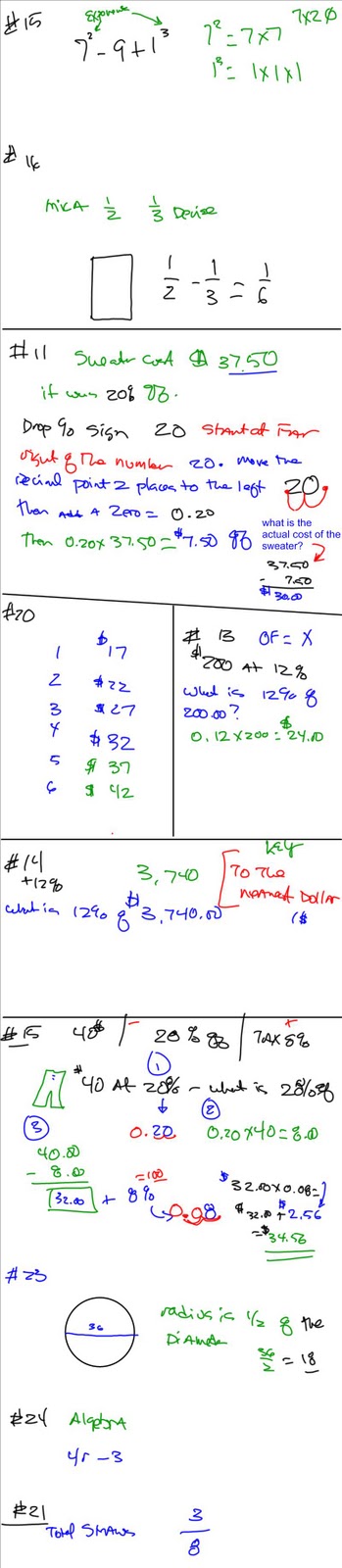
nOTES ArE Up for 2/8/12 :)

Today... 1st period worked on finding the percent of a number... we went shopping!  3rd and 5th continued to work on percents and converting decimals and fractions and back and forth.. see the NOTE page! Be cool don't drool  math RULES

Tuesday, February 7, 2012

Class notes 2/6,7

We are working on decimals to fractions, fractions to decimals and then for fun we have added percents!  That is far out!!! \(get it space is far out!)  Anyhow... take a peak at our class notes.

Friday, February 3, 2012

Blog for Februrary 6 - 10

Welcome Space Travelers!

Welcome... hope you enjoyed your Friday off!  Yeah... so I wish I was traveling in space some place but I was here working hard doing your grades... wow did a lot of you get Fs!!! hahah no just teasing you... NO ONE got an F.  You all have done great... and need to keep working hard!  We are getting into more difficult material and you space walkers... need to really push yourself,  have pride in what you do!! Time to step up!

THIS WEEK: Back to decimals and percents... think of decimals as money and I KNOW all of you like money and percents as how much you can save when  you go shopping!
               
CALCULATOR !!!  YOU really want to make sure you purchase a calculator that can do fractions, it needs to have an ABC button on it!  Trust me you’re going to want a fraction calculator!!


SPACE  FACT: What would it be like to walk I space?
The first person to go on a spacewalk was Alexei Leonov. He was from Russia. The first spacewalk was on March 18, 1965. It was 10 minutes long.

The first American to go on a spacewalk was Ed White. His spacewalk was on June 3, 1965, during the Gemini 4 mission. White's spacewalk lasted 23 minutes.

Today, astronauts go on spacewalks outside the International Space Station. Spacewalks usually last between five and eight hours, depending on the job.

The world record for the most spacewalks is held by Russian astronaut Anatoly Solovyev. He has been on 16 spacewalks and spent more than 82 hours outside in space. That's almost 3 ½ days of walking in space! NASA astronaut Michael Lopez-Alegria holds the U.S. record for the most spacewalks. He has done 10 spacewalks and spent more than 67 hours. 


div> When astronauts go on spacewalks, they wear spacesuits to keep themselves safe. Inside spacesuits, astronauts have the oxygen they need to breathe. They have the water they need to drink.

Astronauts put on their spacesuits sever
al hours before a spacewalk. The suits are pressurized. This means that the suits are filled with oxygen.

Once in their suits, astronauts breathe pure oxygen for a few hours. Breathing only oxygen gets rid of all the nitrogen in an astronaut's body. If they didn’t get rid of the nitrogen, the astronauts might get gas bubbles in their body when they walked in space. These gas bubbles can cause astronauts to feel pain in their shoulders, elbows, wrists and knees. This pain is called getting "the bends" because it affects the places where the body bends. Scuba divers can also get "the bends."

Astronauts are now ready to get out of their spacecraft. They leave the spacecraft through a special door called an airlock. The airlock has two doors. When astronauts are inside the spacecraft, the airlock is airtight so no air can get out. When astronauts get ready to go on a spacewalk, they go through the first door and lock it tight behind them. They can then open the second door without any air getting out of the spacecraft. After a spacewalk, astronauts go back inside through the airlock.

Astronauts are now ready to get out of their spacecraft. They leave the spacecraft through a special door called an airlock. The airlock has two doors. When astronauts are inside the spacecraft, the airlock is airtight so no air can get out. When astronauts get ready to go on a spacewalk, they go through the first door and lock it tight behind them. They can then open the second door without any air getting out of the spacecraft. After a spacewalk, astronauts go back inside through the airlock.

One way astronauts train for spacewalks is by going for a swim. Floating in space is a lot like floating in water. Astronauts practice spacewalks underwater in a large swimming pool. The pool is called the Neutral Buoyancy Laboratory, or NBL. It is near NASA's Johnson Space Center in Houston, Texas. The pool holds 6.2 million gallons of water. Astronauts train seven hours in the pool for every one hour they will spend on a spacewalk.

Another way astronauts practice for a spacewalk is by using virtual reality. This is sort of like playing a video game. Astronauts wear a helmet with a video screen inside. They also wear special gloves. A video of what they will see during a spacewalk is shown on the screen inside the helmet. When the astronaut moves, the special gloves allow the movements to be shown with the video. The virtual reality simulation looks and feels just like a spacewalk. 


BLOG QUESTIONS: See the Space Facts for help!
1) If you were in space what would you take a picture of?

2) If you were to take the number of space walks that the American record setter for space walks took... and then the amount of time the astronaut was in space for all those walks, how many hours could we say each space walk lasted?

3) How many hours in the pool would an astronaut train for walking in space if they were going to be walking in space for total of 27 ½ hours?

4) How many minutes longer did the first American to walk in space take than the first person to walk in space walk take?

5) How many gallons of water is NASA’s swimming pool hold_____?  If you were to round that to the nearest whole number what would that be____?

GONZAGA MENS BASKETBALL           
Tough loss last night (Thursday night) to BYU... ouch... they have to beat St. Marys,  next week.. or ouchy wouchy ... we may not get into the Big Dance...so keep those fingers crossed! 

Fri, Nov 11 Eastern Washington Spokane, Wash. W 77 - 69
Mon, Nov 14 Washington State Spokane, Wash. 9 p.m. W 89-81
Sat, Nov 26 Western Michigan (Spokane Arena) 1 p.m. W 78-58
Wed, Nov 30 Notre Dame Spokane, Wash. 8:15 p.m. W 73-53
Sat, Dec 03 Illinois Champaign, Ill. 12:15 p.m. L 82-75
Sat, Dec 10 Michigan State Spokane, Wash. 6 p.m. L 74 - 67
Thu, Dec 15 Oral Roberts Spokane, Wash. 6 p.m. W 67 - 61
Sat, Dec 17 Arizona (Battle In Seattle) Seattle, Wash.  1 p.m. W 71 - 60
Tue, Dec 20 Butler Spokane, Wash. 6 p.m. W 71-55
Thu, Dec 22 Air Force Spokane, Wash. 6 p.m. W 70-60
Wed, Dec 28 Portland * Spokane, Wash. 6 p.m. W 90-51
Sat, Dec 31 Xavier Cincinnati, Ohio 5 p.m. W 72-65
Thu, Jan 05 Pepperdine * Spokane, Wash. 6 p.m.  W 73-45
Sat, Jan 07 Santa Clara * Spokane, Wash. 5 p.m. W82-60
Thu, Jan 12 Saint Mary's * Moraga, Calif. 8 p.m. L 83-62
Sat, Jan 14 Loyola Marymount * Los Angeles, Calif. W 62-58
Thu, Jan 19 San Francisco * Spokane, Wash. W 74-63
Sat, Jan 21 San Diego * Spokane, Wash. 5 p.m.  W 77-60
Thu, Jan 26 Portland * Portland, Ore. 8 p.m. W 74-62
Thu, Feb 02 BYU * Provo, Utah 7 p.m. L 73- 83
Sat, Feb 04 Pepperdine * Malibu, Calif. TBA
Thu, Feb 09 Saint Mary's * Spokane, Wash. 8 p.m.
Sat, Feb 11 Loyola Marymount * Spokane, Wash. 5 p.m. Thu, Feb 16 Santa Clara * Santa Clara, Calif. 8 p.m.
Sat, Feb 18 San Francisco * San Francisco, Calif. TBA
Thu, Feb 23 BYU * Spokane, Wash. 8 p.m.
Sat, Feb 25 San Diego * San Diego, Calif. TBA

Remember MATH is OUT OF THIS WORLD!

As always, you are amazing, incredible people with the whole world waiting to be changed by YOU!

Mr. Rott


Friday, January 27, 2012

Mr. Rotts Classroom Blog Jan 30th - Feb 3rd

Welcome Space Travelers!
After a long week ... of testing.. And more testing.. And still more testing... we are finally ready to get back to work!   1st period is going to really focus on harder material so you will have to decide to step up .. Or just coast along... you know what I want for you!  Be strong... deep space is not a scary place!  Hahah that rhymes!

THIS WEEK: Back to decimals and percents... think of decimals as money and I KNOW all of you like money!

CALCULATOR !!!  YOU really want to make sure you purchase a calculator that can do fractions, it needs to have an ABC button on it!  Trust me you’re going to want a fraction calculator!!

SPACE  FACT: Shooting Stars or Space Aliens?

What are meteor showers?

An increase in the number of meteors at a particular time of year is called a meteor shower.

Comets shed the debris that becomes most meteor showers. As comets orbit the Sun, they shed an icy, dusty debris stream along the comet's orbit. If Earth travels through this stream, we will see a meteor shower. Depending on where Earth and the stream meet, meteors appear to fall from a particular place in the sky, maybe within the neighborhood of a constellation.

Meteor showers are named by the constellation from which meteors appear to fall, a spot in the sky astronomers call the radiant. For instance, the radiant for the Leonid meteor shower is located in the constellation Leo. The Perseid meteor shower is so named because meteors appear to fall from a point in the constellation Perseus.
What are shooting stars?

"Shooting stars" and "falling stars" are both names that people have used for many hundreds of years to describe meteors -- intense streaks of light across the night sky caused by small bits of interplanetary rock and debris called meteoroids crashing and burning high in Earth's upper atmosphere. Traveling at thousands of miles an hour, meteoroids quickly ignite in searing friction of the atmosphere, 30 to 80 miles above the ground. Almost all are destroyed in this process; the rare few that survive and hit the ground are known as meteorites.

When a meteor appears, it seems to "shoot" quickly across the sky, and its small size and intense brightness might make you think it is a star. If you're lucky enough to spot a meteorite (a meteor that makes it all the way to the ground), and see where it hits, it's easy to think you just saw a star "fall."
How can I best view a meteor shower?

If you live near a brightly lit city, drive away from the glow of city lights and toward the constellation from which the meteors will appear to radiate.

For example, drive north to view the Leonids. Driving south may lead you to darker skies, but the glow will dominate the northern horizon, where Leo rises. Perseid meteors will appear to "rain" into the atmosphere from the constellation Perseus, which rises in the northeast around 11 p.m. in mid-August.

After you've escaped the city glow, find a dark, secluded spot where oncoming car headlights will not periodically ruin your sensitive night vision. Look for state or city parks or other safe, dark sites.

Once you have settled at your observing spot, lie back or position yourself so the horizon appears at the edge of your peripheral vision, with the stars and sky filling your field of view. Meteors will instantly grab your attention as they streak by.
How do I know the sky is dark enough to see meteors?

If you can see each star of the Little Dipper, your eyes have "dark adapted," and your chosen site is probably dark enough. Under these conditions, you will see plenty of meteors.
What should I pack for meteor watching?

Treat meteor watching like you would the 4th of July fireworks. Pack comfortable chairs, bug spray, food and drinks, blankets, plus a red-filtered flashlight for reading maps and charts without ruining your night vision. Binoculars are not necessary. Your eyes will do just fine.

 BLOG QUESTIONS: See the Space Facts for help!
1) Have you ever seen a shooting star?

2) How fast is a meteor. traveling before it becomes a shooting star?

3) What fraction would you make out of the letters in the word meteor if the numerator represented the number of vowels in the word meteor?

4) Go to the Meteor Shower Dates web site and answer these questions:
    a)What is the date for the next meteor shower?
    b)At the next meteor shower date... what will be the speed of the          Meteors as they hit our atmosphere?
c)Which month has the most predicted meteor showers?


GONZAGA MENS BASKETBALL           
Well it was not a pretty win but at least I was able to see the Zags beat Portland!  PLUS it was my sons birthday! WOW... so  a Zag win, what a great bday present for my son, wouldnt you say! We sat surrounded by Zag fans... from young to old!  

Pure bliss!

Fri, Nov 11 Eastern Washington Spokane, Wash. W 77 - 69
Mon, Nov 14 Washington State Spokane, Wash. 9 p.m. W 89-81
Sat, Nov 26 Western Michigan (Spokane Arena) 1 p.m. W 78-58
Wed, Nov 30 Notre Dame Spokane, Wash. 8:15 p.m. W 73-53
Sat, Dec 03 Illinois Champaign, Ill. 12:15 p.m. L 82-75
Sat, Dec 10 Michigan State Spokane, Wash. 6 p.m. L 74 - 67
Thu, Dec 15 Oral Roberts Spokane, Wash. 6 p.m. W 67 - 61
Sat, Dec 17 Arizona (Battle In Seattle) Seattle, Wash.1 p.m. W 71 - 60
Tue, Dec 20 Butler Spokane, Wash. 6 p.m. W 71-55
Thu, Dec 22 Air Force Spokane, Wash. 6 p.m. W 70-60
Wed, Dec 28 Portland * Spokane, Wash. 6 p.m. W 90-51
Sat, Dec 31 Xavier Cincinnati, Ohio 5 p.m. W 72-65
Thu, Jan 05 Pepperdine * Spokane, Wash. 6 p.m.  W 73-45
Sat, Jan 07 Santa Clara * Spokane, Wash. 5 p.m. W82-60
Thu, Jan 12 Saint Mary's * Moraga, Calif. 8 p.m. L 83-62
Sat, Jan 14 Loyola Marymount * Los Angeles, Calif. W 62-58
Thu, Jan 19 San Francisco * Spokane, Wash. W 74-63
Sat, Jan 21 San Diego * Spokane, Wash. 5 p.m.  W 77-60
Thu, Jan 26 Portland * Portland, Ore. 8 p.m. W 74-62
Thu, Feb 02 BYU * Provo, Utah 7 p.m.
Sat, Feb 04 Pepperdine * Malibu, Calif. TBA
Thu, Feb 09 Saint Mary's * Spokane, Wash. 8 p.m.
Sat, Feb 11 Loyola Marymount * Spokane, Wash. 5 p.m.
Thu, Feb 16 Santa Clara * Santa Clara, Calif. 8 p.m.
Sat, Feb 18 San Francisco * San Francisco, Calif. TBA
Thu, Feb 23 BYU * Spokane, Wash. 8 p.m.
Sat, Feb 25 San Diego * San Diego, Calif. TBA

Remember MATH is OUT OF THIS WORLD!

As always, you are amazing, incredible people with the whole world waiting to be changed by YOU!

Mr. Rott 


Friday, January 20, 2012

Notes for State Math Test

Here are the notes from our state math test study packet.. remember you have had NO homework at all this week and NONE next week so  you can have time to study... push yourself to go over the study packet every night, it will help!


Tuesday, January 17, 2012

Mr. Rott's Classroom Blog January 17-20


Hello Space Travelers… 
Well I will confess, last night I was sure, completely sure we were going to have a snow day that I – in keeping with the Space theme for the year, I watched Transformers The Dark Side of the Moon… oh very cool movie! But sad to say we did not have a snow day… shoot!  Tonight we are supposed to get 1 inch … perhaps that will make enough snow so you can stay home and play in the snow!

This week.. we will be working on getting ready for the state math test… today we worked on rounding whole numbers and decimals.. remember the rules! 

The homework this week will be you studying the packet that I will give you tomorrow if we have school… you are to review it every night for at least 20 mins… just like if you had homework to turn in.  Next week… test time!

Remember you are amazing wonderful people!! Do something great today!

Monday, January 9, 2012

Adding Subtracting Decimals

If your having a hard time with adding or subtracting decimals MAKE sure you check out  the class notes for 1/9/12!  They are way cool!  Mr. Rott

REMEMBER to notice if your homework equation is addition or subtraction.  YOU do NOT borrow if its addition!

Friday, January 6, 2012

Mr. Rotts Blog for the week of 1/13/12

Welcome Space Travelers!
 Now isn’t it nice to back at school?  Come on.. I know you couldn’t wait until you were able to hang out with your friends, talk, tell each other what you got for Christmas!..... it sure seemed like you were all excited about getting back to school by all the chatter in the hallways... 

THIS WEEK: We have started to work on percents and decimals, we will continue that this week and then start to get ready for our State Math Test... OH BOY!... 


CALCULATOR !!!  YOU really want to make sure you purchase a calculator that can do fractions, it needs to have an ABC button on it!  Trust me you’re going to want a fraction calculator!!

SPACE  FACT: Space Suits


We all know that clothes are important, in fact there is a saying that goes, clothes makes the man... meaning that what a person wears can say a lot about the person.  Astronauts also need space clothing for when they go out and work on the shuttle or even walk on the moon!

Spacesuits help astronauts in several ways. Spacewalking astronauts face a wide variety of temperatures. In Earth orbit, conditions can be as cold as minus 250 degrees Fahrenheit. In the sunlight, they can be as hot as 250 degrees. A spacesuit protects astronauts from those extreme temperatures.

The reason that spacesuits are white is because white reflects heat in space the same as it does here on Earth. Temperatures in direct sunlight in space can be more than 275 degrees Fahrenheit.

Putting on a spacesuit takes 45 minutes, including the time it takes to put on the special undergarments that help keep astronauts cool. After putting on the spacesuit, to adapt to the lower pressure maintained in the suit, the astronaut must spend a little more than an hour breathing pure oxygen before going outside the pressurized module.

A spacesuit weighs approximately 280 pounds on the ground -- without the astronaut in it. In the microgravity environment of space, a spacesuit weighs nothing.

Astronauts wear orange spacesuits called "launch and entry suits" during launch and landing of the space shuttle. In space, these suits can be worn only inside the shuttle.

An EVA is a spacewalk that takes place outside of a spacecraft. EVA stands for "extravehicular activity."


Alan Shepard is the only person to hit a golf ball on the moon. During the Apollo 14 mission, he fitted an 8 iron head to the handle of a lunar sample collection device and launched three golf balls. They are still there!

Each Apollo mission required 15 suits to support the mission. For the main, or prime, three-man crew, each member had three suits: one for flight; one for training; and one as a flight backup in case something happened to the flight suit. Thus, the prime crew had a total of nine suits. The backup three-man crew each had two suits: one for flight and one for training.

The Sonny Carter Training Facility including the Neutral Buoyancy Lab provides controlled neutral buoyancy operations to simulate the microgravity or weightless condition that is experienced by spacecraft and crew during spaceflight. For the astronaut, the facility provides important prefflight training for extravehicular activities and with the dynamics of body motion under weightless conditions.

Putting a spacesuit on is called "donning" the suit. Removing the suit is called "doffing."  

Thermofoil heaters are attached inside each of the fingertips in one of the layers of the glove. The heaters are located approximately over each of the crew member’s fingernails. The heaters have an on-off switch near each of the gloves' wrists.

No difference exists in a male's or female's suit, though the female astronaut usually requires a smaller size.
BLOG QUESTIONS: See the Space Facts and also the link for Click able Space Suit

1) Add the amount that you weigh plus the weight of the Space Suit and what is that total____?

2) How many suits does each Apollo mission require____?  If there were 25 missions in ten years how many total suits would have been used______?   

3) How many golf balls were hit on the moon__?  And where are they today______?

4) How many parts are there to a space suit_____?  See the Space Suit link.

5) How long does it take to put on a space suit___?  If you were an astronaut and had to put on and take off your space suit three times in one day... how much time would you have spent in one day getting into your suit___?

GONZAGA MENS BASKETBALL           
The team is doing great!  They will be playing some tough teams...
Fri, Nov 11 Eastern Washington Spokane, Wash. W 77 - 69
Mon, Nov 14 Washington State Spokane, Wash. 9 p.m. W 89-81
Sat, Nov 26 Western Michigan (Spokane Arena) 1 p.m. W 78-58
Wed, Nov 30 Notre Dame Spokane, Wash. 8:15 p.m. W 73-53
Sat, Dec 03 Illinois Champaign, Ill. 12:15 p.m. L 82-75
Sat, Dec 10 Michigan State Spokane, Wash. 6 p.m. L 74 - 67
Thu, Dec 15 Oral Roberts Spokane, Wash. 6 p.m. W 67 - 61
Sat, Dec 17 Arizona (Battle In Seattle) Seattle, Wash. 1 p.m. W 71 - 60
Tue, Dec 20 Butler Spokane, Wash. 6 p.m. W 71-55
Thu, Dec 22 Air Force Spokane, Wash. 6 p.m. W 70-60
Wed, Dec 28 Portland * Spokane, Wash. 6 p.m. W 90-51
Sat, Dec 31 Xavier Cincinnati, Ohio 5 p.m. W 72-65
Thu, Jan 05 Pepperdine * Spokane, Wash. 6 p.m.  W 73-45
Sat, Jan 07 Santa Clara * Spokane, Wash. 5 p.m.
Thu, Jan 12 Saint Mary's * Moraga, Calif. 8 p.m.
Sat, Jan 14 Loyola Marymount * Los Angeles, Calif. TBA
Thu, Jan 19 San Francisco * Spokane, Wash. TBA
Sat, Jan 21 San Diego * Spokane, Wash. 5 p.m.
Thu, Jan 26 Portland * Portland, Ore. 8 p.m.
Thu, Feb 02 BYU * Provo, Utah 7 p.m.
Sat, Feb 04 Pepperdine * Malibu, Calif. TBA
Thu, Feb 09 Saint Mary's * Spokane, Wash. 8 p.m.
Sat, Feb 11 Loyola Marymount * Spokane, Wash. 5 p.m.
Thu, Feb 16 Santa Clara * Santa Clara, Calif. 8 p.m.
Sat, Feb 18 San Francisco * San Francisco, Calif. TBA
Thu, Feb 23 BYU * Spokane, Wash. 8 p.m.
Sat, Feb 25 San Diego * San Diego, Calif. TBA

Remember MATH is OUT OF THIS WORLD!